

Are Platelet-Rich Plasma and Platelet-Rich Fibrin Worth Your Time and Money?
PRP, PRF, PFP, even PDGF: You’re not alone for thinking these names resemble an alphabet soup more than hair growth treatments. And, if like many you’ve found yourself wondering what (if anything) these treatments can do for your hair, you’re also not alone. I’ve gotten so many questions recently on the differences (and hype) that I recently posted a video, PRP vs PRF.
While some of these growth promoting treatments have their place in your hair growth journey, I want to take the time this newsletter to cut through the marketing and hype to talk about what they are, when they might be helpful, and what they can’t do.
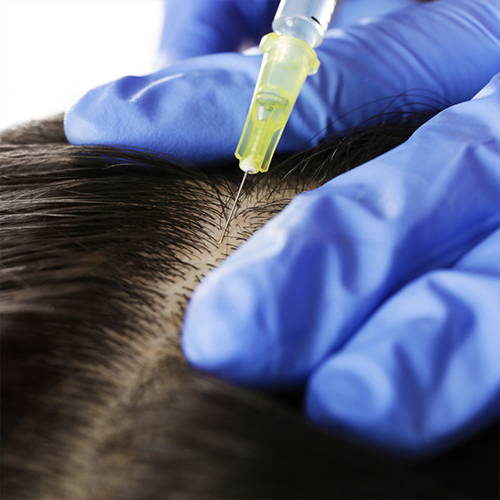
It All Started with Platelet-Rich Plasma
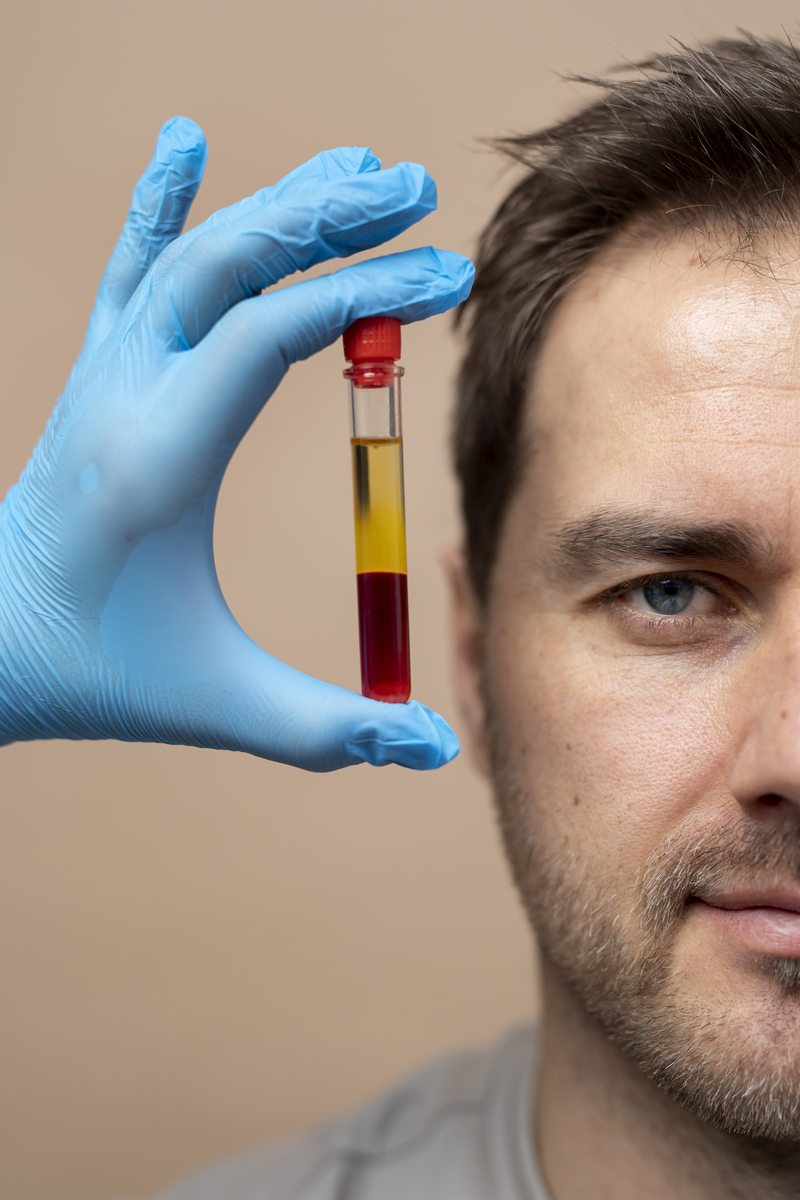
When your blood is drawn and spun at a high speed with an anticoagulant (a compound that prevents clotting), uncoagulated platelets (specialized cell fragments responsible for clotting a wound and stopping bleeding) and plasma proteins are isolated. This isolate (what we call PRP) is then either injected into sections of the scalp or applied after microneedling.
It’s expensive, requires completely sterile and specialized equipment, and a qualified hair specialist to administer (such as myself and my team).
Why Go to the Trouble?
Platelets release a whole slew of growth factors as part of their clotting and wound healing function (EX: VEGF, PDGF, IGF-1, TGF-β). These growth factors have been shown to:
- Increase blood supply to hair follicles
- Stimulate hair follicle stem cells
- Reduce scalp inflammation
- Extend the anagen (growth) phase resulting in thicker hair shafts
When injected (or applied after microneedling) into the scalp, PRP delivers a fast burst of growth factors over the course of a few hours. Decades of research involving thousands of patients with androgenetic alopecia shows that PRP treatments can in fact improve both density and hair shaft diameter, especially when combined with finasteride or dutasteride and minoxidil. PRP can also be helpful after a hair transplant to give recovery a boost.
All of this is great for your hair.
However, there are some caveats all the recent hype tends to skip over.
PRP is NOT a replacement for medical hair loss therapy. It’s best thought of as an adjunct or complimentary therapy. It can improve gains and possibly help speed results along, and there may be a place for it for helping recovery from temporary forms of hair loss (such as telogen effluvium), but it’s costly and needs to be repeated every few months to see results. While it can be beneficial, you need to know your budget. Opting for PRP instead of the bedrock of medical therapy is a recipe for poor results. Also, there is no guarantee. While it’s an established adjunct therapy, results can and will vary.

What About PRF?
I’ve seen Platelet-Rich Fibrin (PRF) called PRP 2.0. While it’s true it’s an evolution of PRP, saying it’s better is not really accurate. It’s too new and the research just isn’t there. Unlike PRP, which has well established protocols and robust research, PRF is maybe better theoretically but no one has managed to show that convincingly yet.
How is it Different?
The biggest difference between PRP and PRF is that for PRF, an anticoagulant isn’t used. Blood is spun at lower speed where, unlike PRP where clotting is prevented, blood forms natural clots. This clotting leads to the formation of a fibrin scaffold that traps platelets, white blood cells, and stem cells.
In theory, the fibrin matrix should allow for a slower, sustained release of growth factors over days instead of hours compared to PRP. That prolonged release could mean better, longer-lasting growth stimulation.
However, it’s far from proven. Though recent small studies (many with <50 patients conducted between 2020–2024) suggest PRF is at least not inferior to PRP and possibly modestly superior, the results are mixed and, honestly, not statistically significant. The only true head-to-head trial that compared PRF to PRP ultimately found no significant difference in growth or density. We need more data and larger studies.
The other issue that comes up with PRF is that unlike PRP there are no standardized protocols. The spin is slower, the application is trickier and requires finesse since the platelets are coagulated. Larger needles and speed are required, and no one is quite sure which treatment style works best yet. PRF also costs significantly more than PRP but with less certainty. That doesn’t make it bad, but you need to be aware of the limitations if you’re considering trying it.
Spot the Red Flag: PFP (Platelet-Free Plasma)
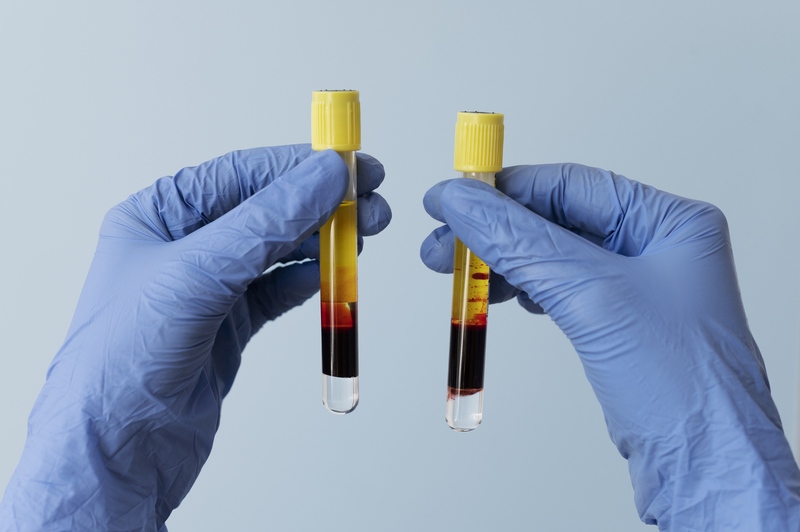
Some places offer PFP, a clear, yellow plasma without platelets. It’s essentially a placebo for hair regrowth. It has no hair regrowth effect at all. If what’s about to be injected looks completely transparent, ask: “Where are the platelets?” and “What’s the platelet concentration?”
How I Help Patients Choose
I like to think of PRP and PRF as a stimulation step, one that can help “wake up” existing follicles and improve shaft caliber. Patients considering it however should keep their expectations in check. Patients aiming for stability and visible thickening are typically really happy with this kind of treatment. Folks who are expecting a 30–50% transformation from PRP/PRF injections alone will be disappointed.
Below is an example of where PRP can fit into a hair restoration journey.
- Start with prevention. If you’re not addressing DHT (when appropriate) and exploring medical hair loss therapy, you’re bailing water without fixing the leak. Get your hair stable first.
- Add stimulation. Choose PRP or PRF (understanding the limitations). Financially, you need to plan for an initial series and future maintenance. This step isn’t essential but can help if appropriate.
- Consider a hair transplant when pattern and goals warrant it.
- Measure your results, don’t guess. Baseline photos, trichoscopy/densitometry where possible, and follow-ups to track real change.
- Personalize. Hair loss is not one-size-fits-all. Neither is your plan. Find an expert who understands your goals and can be honest about what you can really achieve.
Speaking of which, if you have questions about whether PRP could be appropriate for your hair goals or want to develop a tailored plan (prevention, stimulation, and, when appropriate, surgery), that’s what I do every day. Book a consultation so we can explore your options together.
Linkov Hair Surgery
150 E 56th St, #1A
New York, NY 10022
(212) 970-9404