

Hair Transplant Repair & Revision
Advances in hair restoration techniques now offer effective solutions for correcting failed or suboptimal hair transplants. Repair and revision surgeries aim to address common issues, such as unnatural hairlines, poor density, and visible scarring. The goal of a revision is always to help patients achieve more natural results and ideally the density and hair line they originally envisioned.
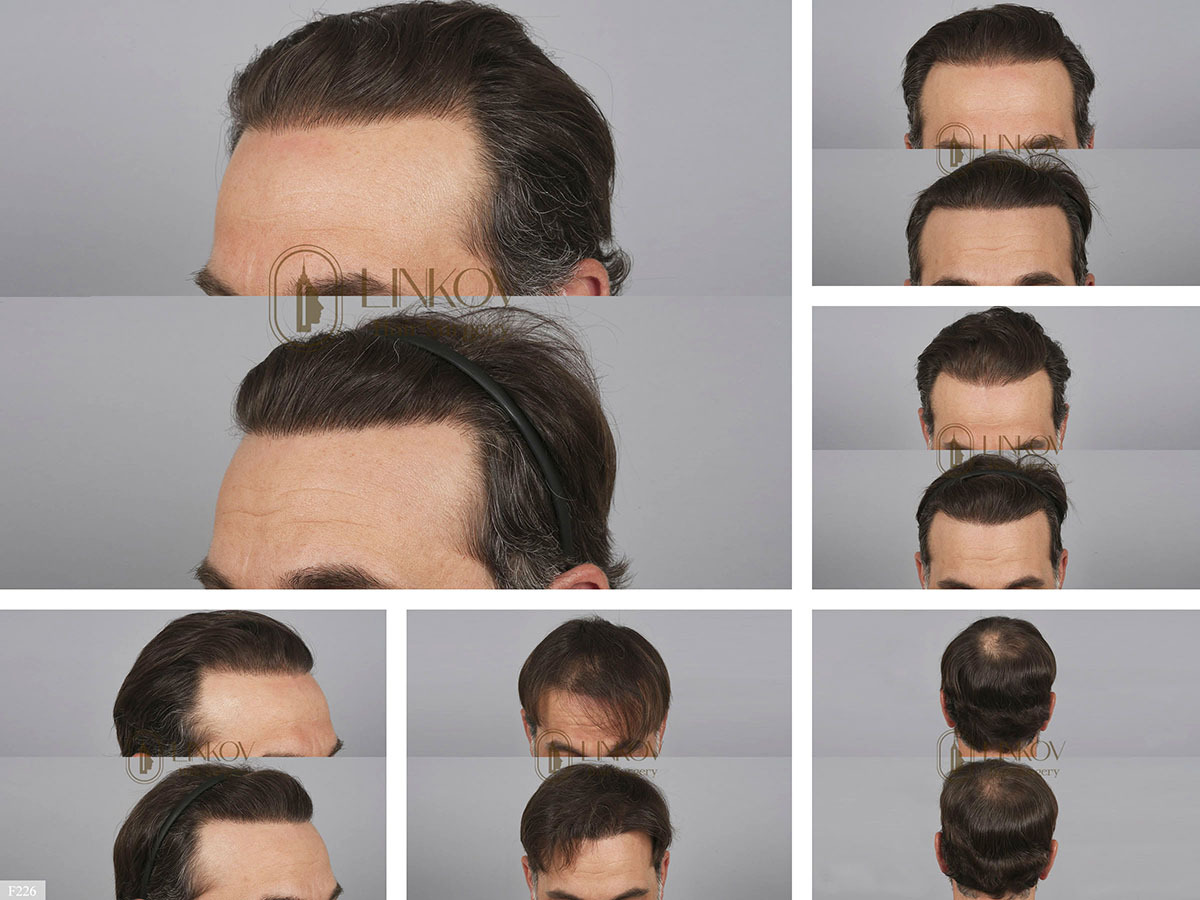
What Is Involved in a Hair Transplant Repair & Revision?
This type of hair surgery is designed to fix problems and mistakes that occurred in a prior hair transplant. Dr. Linkov assesses issues like poorly executed hairlines, misdirected grafts, mismatched density, and donor depletion. Using his artistry and specialized techniques, he designs a bespoke surgical plan to repair the previous transplant and achieve an improved result. Each repair or revision is unique and can include both surgical and nonsurgical strategies to achieve best results.
When performing a revision or repair surgery, Dr Linkov is looking to:
- Correct unnatural hairlines or hair angles
- Improve patchy looking areas and density
- Camouflage visible scars in the donor and/or recipient areas
Note that repairing and revising a previous hair transplant is a specialty surgery. Success depends strongly on remaining donor supply as well as the skill and artistry of your surgeon.

What Common Problems Can Be Addressed?
Poor results often stem from judgment errors. These often include (but are not limited to) overly aggressive hairline designs, improper graft handling, poor transplant survival, and donor overharvesting leading to ‘moth-eaten’ patches and scars.
Transplant Techniques Used
Graft excision and reimplantation through FUE is one surgical technique used to repair misdirected grafts and sometimes repair hairlines and mismatched density. If donor area is robust, new grafts may be used to repair through FUE or potentially FUT.
Scar camouflage can be achieved through transplantation directly into scars. Non-surgical options like PRP, exosomes, medical hair loss therapy or even micropigmentation may be recommended post-surgery to improve density and optimize final results.
Which Cases Benefit the Most?
A hair transplant repair surgery can benefit patients who are unhappy with unnatural looking results or ongoing hair loss that now exposes an overly aggressive transplant. Wait 9-12 months post-original procedure to book a consultation for an accurate assessment.
What to Expect
After a consultation and agreed upon restoration plan, your surgery is booked and performed in-office. Results improve gradually over 6-12 months, with any subsequent surgeries occurring a year out.
Ready to Start Your Hair Restoration Journey?
A repair and revision hair transplant begins with a personalized consultation. Let’s assess your hair goals together and find the right, confident approach for your needs.
Linkov Hair Surgery
150 E 56th St, #1A
New York, NY 10022
(212) 970-9404