

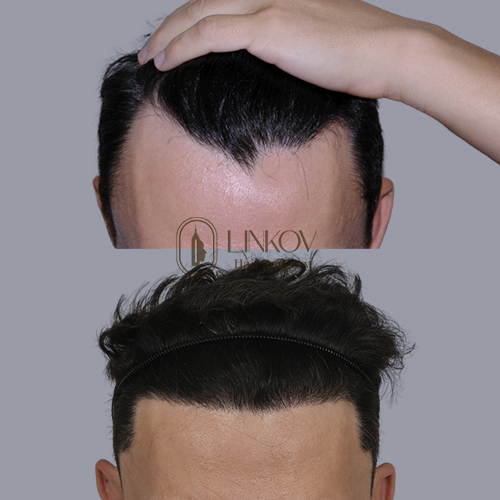
There’s a new medication for the most common form of hair loss, androgenetic alopecia, which will affect 50% of men and 40% of women over their lifetime. Its name is clascoterone, and initial reports have been impressive. Claims that the medication can improve hair count by more than 500% is garnering a lot of excitement. Beyond the hype, does clascoterone deliver? Does the research translate into visible, meaningful results for your hair? Or are things being… inflated.
Treating Androgenetic Alopecia
Clascosterone is currently being studied as a potential treatment for androgenetic alopecia, the most common type of hair loss affecting both men and women. Androgenetic alopecia is a genetic form of hair loss triggered by the androgen hormone dihydrotestosterone (DHT). Current medical treatments often include minoxidil (used to stimulate growth and encourage miniaturized vellus hairs to mature) and finasteride/dutasteride (used to combat the androgenic effects of DHT). Spironolactone is a potential therapy for women experiencing androgenetic alopecia to regulate DHT, while finasteride and dutasteride remain the gold standard treatment for men. Both drugs, however, come with rare risks of side effects. In the case of finasteride, the side effect that causes the greatest concern among men is sexual dysfunction.

Where Does Clascoterone Fit in the DHT Story?
Clacosterone is a topically applied androgen receptor inhibitor – what’s called a competitive antagonist. It binds to the androgen receptor but can’t activate it as DHT does. Whereas finasteride is an alpha 5 reductase inhibitor, meaning it blocks the conversion of testosterone to dihydrotestosterone, clascoterone ‘outcompetes’ DHT for the androgen receptor at the hair follicle. Think of clascoterone like an imposter. It looks very similar to DHT, but binds to the receptor even better — but, crucially, without triggering the downstream cascade that leads to hair loss.
Another way to look at it is that if hair follicle androgen receptors are seats in musical chairs, clascoterone makes it so DHT never gets the chance to sit. Two different routes on a map that lead to the same destination — androgen blocking.
Clascoterone is nothing new. It was approved for acne treatment under the name Winleviin 2020 (another condition heavily influenced by androgen activity). But it comes with a potential advantage over other androgen pathway inhibitors (finasteride/spironolactone) in that it’s rapidly metabolized and topically applied. That means it doesn’t stick around to interfere with other androgen-dependent activities, thereby reducing the chance for systemic adverse side effects.

Beyond the Hype
What does the research really say? Cosmo Pharmaceuticals published their clinical phase 3 results in 2025 for 5% topical solution of Breezula (the proposed name for clascoterone formulated as a hair treatment), with FDA approval in their sights. The phase 1 and phase 2 studies carried a number of drawbacks: small study sizes, adverse effects from propylene glycol in the formulation, both of which could lead to problems with the statistical interpretations.
The phase 3 study included 1465 patients over a 6-month double-blinded study (neither the patient nor the researchers knew who was taking the drug and placebo), and a 6-month single-blinded continuation (the subjects are still unaware).
The results in the study are… underwhelming.
In all fairness, it’s possible that the results shown could suffer from a difference in lighting. I go into more detail on my channel, but considering the images published were likely some of their best outcomes, in my opinion, finasteride and minoxidil outperform.
Chasing ‘growth gains’ and other pitfalls
Often, I see people get wrapped up in the hopes for something new. But managing hair loss is more than what’s trending, or even one medication. Right now, the zeitgeist is chasing all things growth and stimulation; people are very fixated on ways to ‘boost’ their hair gains. That’s a mistake. Yes, growth is important, but so is long-term follicle protection. Though finasteride can help grow new hair, its main benefit is improved protection. Expecting an androgen blocker to deliver on density and regrowth all on its own will set you up for failure.
For a reliable source on tried and true hair loss medications, visit Feelconfident.com and see if medical hair loss therapy might be for you.
And, if you’re looking for a way to truly help and protect your hair follicles, consider our Feel Confident hair care line. Real ingredients, real research, and none of the hype. All the products in my hair care line contain caffeine, turmeric root extract, saw palmetto, and pumpkin seed oil, each one beneficial to help promote hair follicle health. To find out more, explore our Haircare collection at Feel Confident.
Linkov Hair Surgery
150 E 56th St, #1A
New York, NY 10022
(212) 970-9404