
A Cure for Baldness?
Late last year two articles appeared a week apart from each other in Newsweek and the New York Post that piqued my interest. Both covered a novel hair growth treatment from National Taiwan University that was being hailed as a potential cure for baldness.
- Baldness cured?
- Breakthrough serum!
- Reverse hair loss in 20 days!
Revisiting the excitement the articles caused, it’s understandable that a lot of people got ahead of things. When were they going to see this new treatment serum hit shelves? Would it be a prescription?
‘Should they put off medical hair loss therapy until this cure arrives?’
I tracked down the article to see if there was anything of clinical interest, and while the research is very cool (I covered the topic in this recent video), it’s firmly still in the experimental phase. That doesn’t mean it’s not worth our while to take a deeper dive (and follow developments) but we need to keep our expectations in check.
What is this experimental serum? How does it work? When might we see human trials?
Read on for the important hot takes.
Enter Taiwan
Great research is being published all the time, but most of it does not have a clinical application. That doesn’t mean it’s bad, it’s just that a lot of research is aimed at furthering our understanding, not developing novel treatments.
The original article appeared in a highly regarded journal, Cell Metabolism, in October 2025, and it’s called Adipocyte lipolysis activates epithelial stem cells for hair regeneration through fatty acid metabolic signaling.
I’ll repeat here what I said in the video: That’s a mouthful.
And, as the research was predominantly performed in a Taiwan lab, it’s been nicknamed the Taiwan paper.
Another positive credential this paper has is that Maksim Plikus (University of California Irvine) is one of the authors.
Fat Dependent Hair Growth
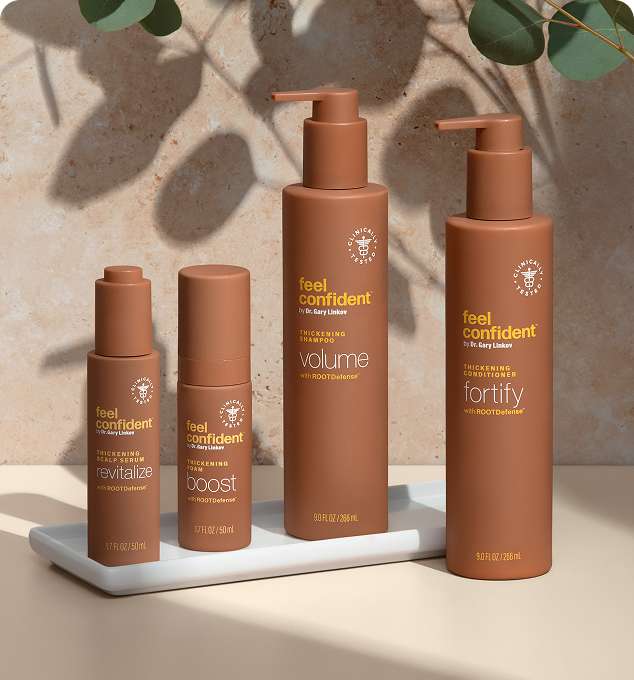
The part of the research article everyone has gotten excited about is how chemically induced skin injury (contact dermatitis) leads to novel hair growth stimulation in female mice. Sodium dodecyl sulfate (SDS), a harsh detergent that’s sometimes found in shampoos (though not Feel Confident Thickening Shampoo) was the chemical agent used.
About 6-7 days after injury, the researchers noted that the mouse hair had started to grow back. Follicle stem cells also seemed to increase, and the growth appeared to be dependent on a process called lipolysis: the breakdown of fat cells under the skin.
This actually makes a lot of evolutionary sense. Imagine a mouse getting injury to its skin from a chemical it encounters from a plant in the wild. Injury occurs to the deeper layers of the skin (where the fat is), and in response, more hairs grow as added protection from any more environmental injury.
To check their theory (that the breakdown of fat was the signal leading to hair growth) the researchers blocked the breakdown of fat both chemically and genetically and observed that injury no longer caused the same hair growth.
They did some other clever experiments, including using other forms of injury that triggered lipolysis (lasers) to confirm it was the right mechanism.
Skin injury -> skin inflammation -> macrophages recruitment -> fat cells to self-destruct -> fatty acids release -> hair follicle stem cell activation
Get to the Miracle Serum Already
There are three big caveats with this hair growth mechanism. The first is that hair regrowth was injury dependent. We know from other research that injecting fat into the scalp can help support hair growth, and it’s a technique used in some hair transplants to increase graft survival. The authors propose that a solution of oleic acid (a monounsaturated omega 9 fatty acid found in olive, canola, and avocado oils), might have enough penetration to reach the follicle stem cells and stimulate growth without the injury (we actually use another bioactive fatty acid, oleanolic acid, in our new Feel Confident Scalp Serum to help reduce DHT levels). But the idea hasn’t been tested yet.
The second caveat is that this study was exclusively performed on a small number of mice (4-6 per study arm). Mice are a truly wonderful model for studying hair growth, but that doesn’t mean things always translate. For example, oils penetrate deeper into mouth epithelium because it’s thinner. Even if an oil solution proves to be applicable in mice for hair growth, human skin is thicker. It’s a bigger application challenge.
The third caveat I haven’t seen discussed has to do with growth phases. Mice (particularly the ones used) have more hair in resting phase. Our hair tends to be in growth (anagen). When something is already growing, it’s much harder to stimulate.
So no, unfortunately there is no miracle serum on the horizon. Perhaps human studies will lead to development but we’re a ways off.
Also, I think something big is being lost in all this talk about stimulating growth.

Bigger Picture: Prevention is Key
We have a lot of ways to stimulate hair regrowth already: microneedling, PRP, minoxidil (arguably the GOAT), low level laser light, massagers.
There’s only so much stimulation potential. I like to think of a hair follicle as a factory. Once it’s burnt out, it’s gone.
The biggest concern I have is that prevention is being lost in the excitement over new ways to stimulate growth. For androgenetic alopecia, spironolactone for women and finasteride for men are essential DHT inhibitors that prevent future loss and protect the hair you still have. All the water bailing in the world won’t help if there’s a hole in the bottom of your boat. The same goes for growth stimulation. It can’t go far if hair loss isn’t being addressed.
I worry people might be tempted to wait around for a miracle drug and end up really regretting missing the window to prevent hair loss.
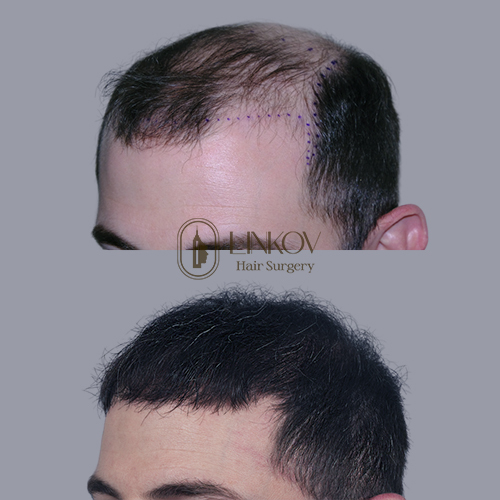
Hair surgery is also getting lost in this conversation which can be a great solution once hair is stabilized.
That’s my takeaway from the excitement over new ways to stimulate hair growth. I’ll keep you updated and posted as always on new research, but prevention, not just stimulation, should be your first step.
If you are considering hair loss therapy, book a consultation with me so we can explore your options and create a plan together.
Linkov Hair Surgery
150 E 56th St, #1A
New York, NY 10022
(212) 970-9404